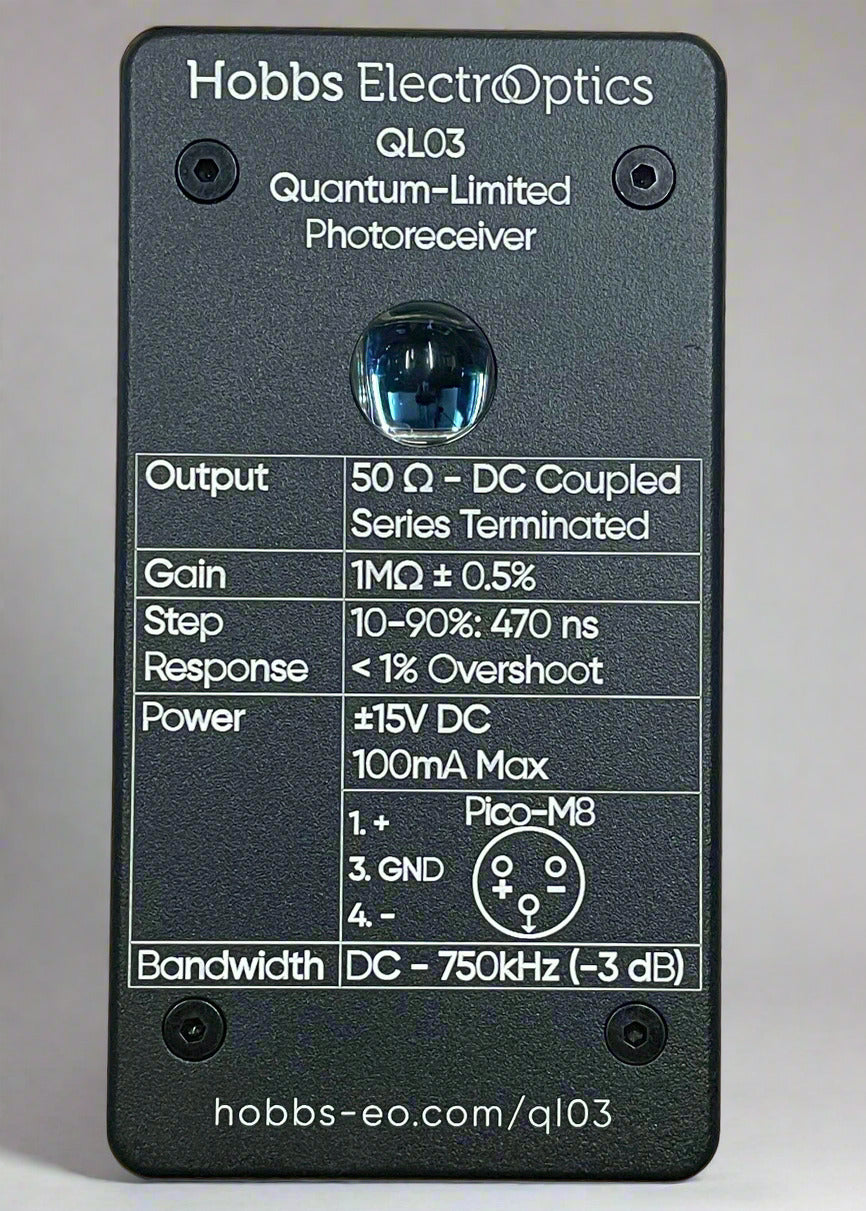
One problem that comes up again and again in doing measurements is that we need the apparatus to be quieter than the thing we’re measuring, ideally by at least a factor of two. Besides quiet, it should be wideband, have an accurately known gain that’s flat with frequency, have a clean step response, and generally do its job while keeping itself out of the way. There’s a wealth of detail in our app note AN-1
on photoreceiver testing.
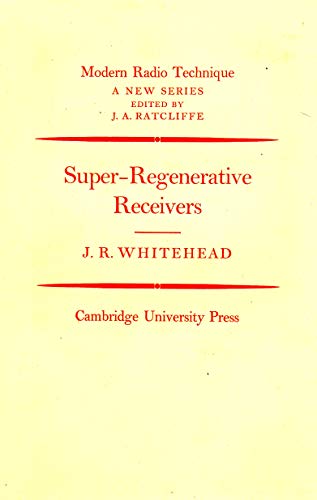
A quick plug for a little gem of a book that all fans of early radio should know about: “Super-Regenerative Receivers” by J. R. Whitehead (Cambridge University Press, 1950). It’s part of the Modern Radio Techniques series, where a bunch of the technical movers and shakers document the advances that were made during the war, e.g. centimeter radar. This one is about the theory and practice of superregenerative radios. I learned a lot from it and had a lot of fun.
The need to control temperature is everywhere, but getting it right is more difficult than one might expect. A domestic furnace controlled by a simple thermostat keeps a house comfortable in winter, but the inside air temperature swings irregularly over a range of a few degrees. That’s fine for a house—you can have a New Year’s party, with a bunch of people dissipating a hundred watts each, doors to hot ovens and the cold outside opening and closing, no worries whatsoever. The heating system keeps it comfortable.
In a previous article, we described an ultralow-cost time-domain reflectometer (TDR) that is used as a radar dipstick for fuel gauges in heavy equipment. Its 150-ps edges were better than good enough, and its rock-bottom BOM cost ($1.30 @ 100 pcs) made it possible for the whole gauge to retail for under $40. That performance is far from the limit for low-cost samplers, as we’ll see.
We’ve got a new photoreceiver available over at our sister site, Hobbs ElectroOptics. The QL03 Photoreceiver comes out of several proof-of-concept systems where we needed a high-sensitivity, low-noise optical receiver for low-light applications.
It features a massive 150 mm² photodiode with slight magnification from an immersion lens, making it especially effective for diffuse light measurements, spectroscopy, and fluorescence detection—plus, setup is a breeze since you’re aiming at a barn door.